If you are thinking about buying a rental near Fort Belvoir, you are looking at one of the more interesting investor pockets in Northern Virginia. The appeal is easy to see: a major military installation, a large civilian workforce, and a steady stream of households that need off-post housing create a market with recurring rental demand. The key is knowing how to underwrite it correctly, because rents, vacancy, and property performance can change fast from one ZIP code to the next. Let’s dive in.
Why Fort Belvoir draws investors
Fort Belvoir has a large and durable employment base. According to the official installation overview, the post supports more than 145 mission partners and serves more than 216,050 military members, civilians, retirees, and families. The same overview, along with a recent Fort Belvoir article, notes that Fort Belvoir is Fairfax County’s largest employer, with about 26,000 employees and a $25 billion regional economic impact, which helps explain why the surrounding rental market stays active.
There is also formal relocation support tied to the base. The Fort Belvoir Housing Services Office helps eligible personnel find off-post rentals, reviews leases, and provides housing resources, while relocation and household-goods offices support PCS moves. That structure matters because it points to repeat turnover and ongoing off-post rental demand around the installation.
Location adds another layer of appeal. Fort Belvoir is about 20 miles south of Washington, D.C., and the installation overview notes bus access from Alexandria-area Metro stations including King Street, Eisenhower Avenue, and Huntington. That means your tenant pool is not limited to military households alone.
Fairfax County sets the backdrop
Any rental near Fort Belvoir sits inside the larger Fairfax County housing market, and that market is both expensive and active. Fairfax County’s 2024 demographics report shows a population above 1.19 million, about 657,000 jobs, median household income of $141,553, and unemployment at 2.5%. For investors, that points to a broad and economically strong renter base.
At the same time, acquisition costs are high. The same county report places the median market value of owned housing at $708,383. That can tighten cash flow, especially if you buy without a disciplined rent and expense model.
Supply conditions also support long-term demand. Fairfax County’s housing needs assessment says the county needs about 15,000 more homes just to reach a healthy vacancy level and may need 41,000 to 95,000 additional homes by 2035. For landlords, constrained supply can be supportive, but it usually keeps purchase prices elevated.
Rental demand is real, but local data matters
One of the biggest mistakes investors make is treating Fort Belvoir as one single rental market. It is not. The county data shows broad demand, but the numbers can vary meaningfully depending on where you buy and what type of property you own.
Fairfax County’s 2024 ACS profile shows 433,476 housing units, 418,418 occupied units, a rental vacancy rate of 3.4%, and renter-occupied units making up 32.6% of occupied housing. Those figures suggest a relatively tight rental environment overall.
But professionally managed complexes tell a more mixed story. Fairfax County’s 2023 rental housing complex analysis found a countywide average monthly rent of $2,020 and an estimated overall vacancy rate of 6.0% for market-rate complexes. The same report showed that methodology can produce a different vacancy picture than ACS data, so it is smart to treat those numbers as complementary rather than identical.
Even within the county, nearby planning districts can perform differently. In that same report, Springfield averaged $1,820 in monthly rent with 1.5% vacancy, while Mount Vernon averaged $1,822 with 9.4% vacancy. If you are evaluating rentals near Fort Belvoir, that is your reminder that property-level and ZIP-level comp selection matters more than any county average.
Use ZIP-code rents for underwriting
If you want a more practical starting point for underwriting, look at ZIP-level rent benchmarks. HUD’s FY2024 Small Area Fair Market Rent schedule shows just how wide the rent range is around Fort Belvoir.
For 1-bedroom units, nearby ZIP codes range from about $1,630 in 22309 and $1,660 in 22306 up to $2,710 in 22060 and 22308. For 2-bedroom units, the range goes from about $1,850 in 22309 and $1,880 in 22306 up to $3,070 in 22060 and 22308. ZIP codes 22079 and 22315 sit more in the middle, at roughly $2,130 and $2,220 for 1-bedrooms and about $2,420 and $2,520 for 2-bedrooms.
That spread is too large to ignore. A property just a short drive from the base may support materially different rent depending on its ZIP code, layout, and nearby competition. For most investors, that means the best habit is to build your pro forma from the closest credible rent comps, not from a countywide headline number.
Recent market trackers also place Fort Belvoir rents in the low-to-mid $2,000s, though the exact figure depends on the source. Apartments.com rent trends reported a March 2026 average of $2,072, while other providers cited in the research vary higher. The takeaway is not that one source is perfect, but that you should verify achievable rent through a tight local comp set.
Best property types near Fort Belvoir
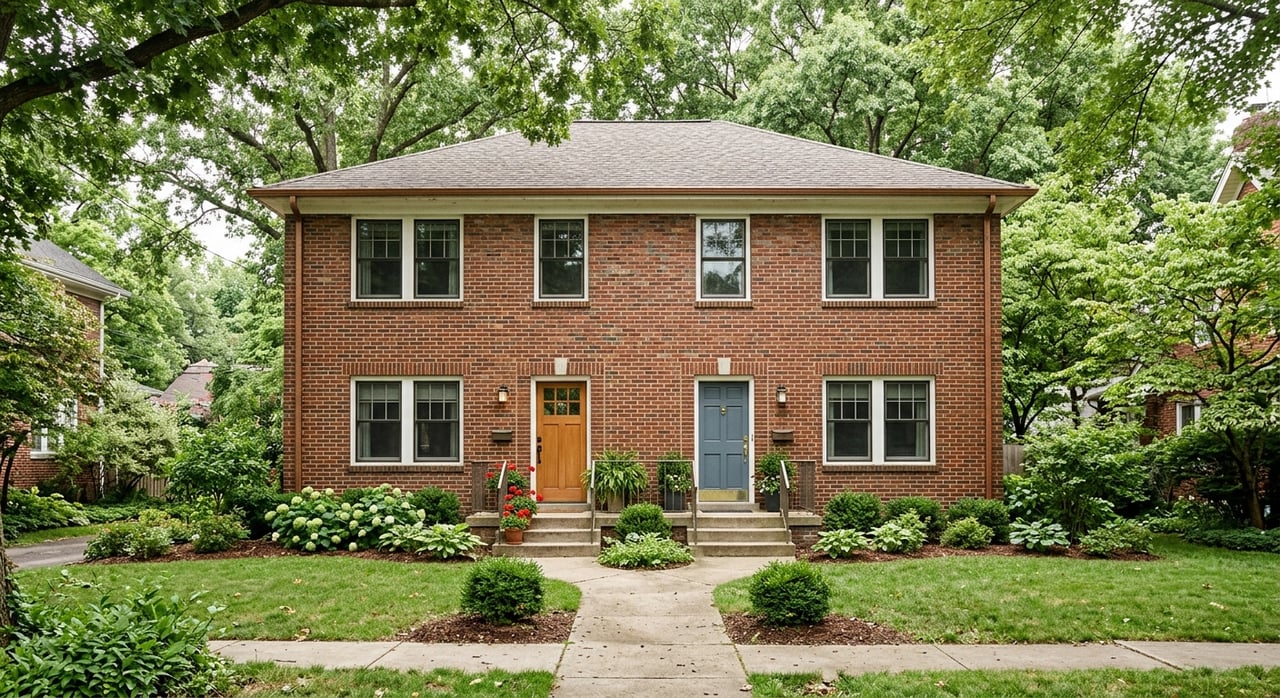
The county’s housing mix offers useful clues about what often fits this market best. Fairfax County’s ACS profile shows that 45.6% of housing units are 1-unit detached and 22.4% are 1-unit attached. That makes townhomes, attached homes, and other family-sized rentals a natural part of the local inventory.
The vacancy data supports that view. Fairfax County’s rental housing complex analysis found townhouse rentals had the lowest vacancy rate at 3.4%, compared with 5.2% for low-rise, 7.6% for high-rise, and 10.6% for mid-rise product. For many Fort Belvoir investors, that makes 2BR to 4BR townhomes and attached homes worth analyzing first.
The rent data also favors larger units. In the same county report, average market-rate rents were $2,143 for 2-bedroom units, $2,480 for 3-bedroom units, and $2,615 for 4-bedroom units. That does not mean every larger home is a good buy, but it does suggest that well-located, family-sized rentals may align better with local demand than smaller luxury product.
Established low-rise rentals can also make sense. The same vacancy report showed lower vacancy in older complexes than in newer ones, with complexes over 20 years old at 5.3% vacancy compared with 17.2% for complexes under six years old. If your strategy depends on premium rents for newer finishes, it may be wise to build in a longer lease-up timeline.
How on-post housing affects off-post rentals
Off-post demand does not exist in a vacuum. The Housing Services Office notes that unaccompanied housing is reserved for junior enlisted Soldiers, while The Villages at Belvoir serves as the privatized on-post family housing partner. That means some households will choose on-post options, while others will look off post based on unit size, timing, commute preferences, or housing style.
For an investor, this matters because off-post rentals are competing within a broader housing ecosystem. You are not just asking whether a property is close to the base. You are asking whether it offers a practical alternative for households who want something different from on-post housing or who need flexibility in their move.
A conservative way to underwrite
Fort Belvoir can be a strong rental-investment area, but it rewards discipline. High prices and uneven micro-market performance mean optimistic projections can create trouble quickly.
A sensible underwriting approach may include:
- Using the lowest credible nearby rent comp rather than the highest asking rent
- Building in vacancy of 5% or more as a stress test
- Paying close attention to the exact ZIP code and property type
- Allowing for a longer stabilization period if the property is newer or positioned at the top of the market
- Comparing your deal against both county trends and immediate local comps
This framework lines up with Fairfax County’s housing data. The county’s housing needs assessment identifies 5% as a healthy vacancy level, while the ACS profile reported 3.4% rental vacancy and the rental-complex analysis estimated 6.0% vacancy for market-rate complexes. In other words, you should expect some turnover and plan for it, even in a generally supported market.
What investors should remember
The case for investing in rentals near Fort Belvoir is not just about being near a military base. It is about owning in a part of Fairfax County that benefits from major employment, recurring relocation activity, and regional commuter access. Those factors can support demand over time.
But the strongest opportunities usually come from careful property selection, not broad assumptions. In this market, ZIP code, property type, and rent discipline can matter more than a generic label like “near Fort Belvoir.” If you want help evaluating a townhome, condo, single-family rental, or small multi-family opportunity in the area, YAMO Premier Properties LLC can help you look at local comps, marketing position, and rental potential with a practical, neighborhood-level lens.
FAQs
Is Fort Belvoir a good area for rental investing?
- Fort Belvoir can be attractive for rental investing because it benefits from a large military and civilian employment base, recurring relocation support, and access to the wider Fairfax County and D.C.-area commuter network.
What rental property types fit best near Fort Belvoir?
- Based on Fairfax County housing and vacancy data, 2BR to 4BR townhomes, attached homes, and some established low-rise rentals are often strong property types to analyze first.
How should you estimate rent near Fort Belvoir?
- You should start with immediate local comps and ZIP-code benchmarks, including HUD small-area rent data, because achievable rents can vary significantly within a short distance of the base.
What vacancy rate should investors use near Fort Belvoir?
- A conservative model should usually test vacancy at 5% or more, since county data shows different vacancy measures and a healthy market is generally considered to have some available inventory.
Does on-post housing reduce off-post rental demand near Fort Belvoir?
- On-post housing serves part of the market, but off-post rentals still attract households seeking different unit sizes, locations, timing flexibility, or housing styles.
Why do micro-markets matter for Fort Belvoir rentals?
- Micro-markets matter because rents and vacancy can differ sharply by planning district, ZIP code, and property subtype, which can materially affect cash flow and leasing speed.