"Soils are marginal for septic tank usage."
That line isn't from a home inspector's report or a worried neighbor. It's from Fairfax County's own comprehensive plan for the Mount Vernon Planning District, written into the county's planning language years before anyone connected it to a real estate closing. The same document goes on to describe "slippage-prone swelling clays" underlying most of the district. County planners have been saying this about the ground under Mount Vernon for a long time. What changed on July 1, 2025, is that a new state law gave that geology a way to show up in writing during a home sale. A little over a year in, a lot of Mount Vernon's housing stock is proving the county's own planners right.
If you own a home here and you're thinking about listing in the next year or two, this is the friction point worth understanding before a buyer's inspector finds it for you.
What actually changed on July 1, 2025
Virginia's House Bill 2671, signed by Governor Youngkin on March 20, 2025, didn't create a rule that every home sale needs a septic inspection. It did something narrower and, in practice, more consequential: it defined what a septic inspection has to include the moment a lender, agent, buyer, or any other party to the transaction asks for one.
Before this law, "inspection" could mean almost anything. A walkover where someone looked for wet spots in the yard. A quick probe of the drain field. Sometimes just a seller's word that the system was fine. Under the new standard, a legitimate inspection has to be performed by a Virginia-licensed onsite sewage system operator, installer, or soil evaluator, and it has to physically examine the septic tank, pump tank, distribution box, treatment unit, control panel, and dispersal field. A complete inspection now requires pumping the tank so the inspector can actually see its condition, not guess at it. The inspector has to hand over a written report within 10 business days. The old rod-and-probe walkover, once common enough to be routine, no longer meets the bar.
None of this forces a reluctant seller into an inspection they didn't agree to. It just means that once someone in the transaction asks for one, the answer they get back is real, documented, and hard to argue with.
Why the ground under Mount Vernon makes this personal
Plenty of Northern Virginia counties have aging septic systems. What sets Mount Vernon apart is that the county has already told you, in its own planning documents, that the soil here works against these systems even when they're properly maintained. The Mount Vernon Planning District's section of the county's comprehensive plan describes swelling clay soils prone to slippage across most of the district, conditions the plan says make septic tank usage marginal to begin with.
That matters because a mandatory pump-out inspection is exactly the kind of test that surfaces a marginal system's problems. A visual walkover might miss a drain field that's been quietly struggling for years. Pumping the tank and inspecting the baffles, the distribution box, and the dispersal field under load doesn't miss it. HB 2671 didn't create the soil problem. It just built the tool that finds it.
The age problem stacked on top of the soil problem
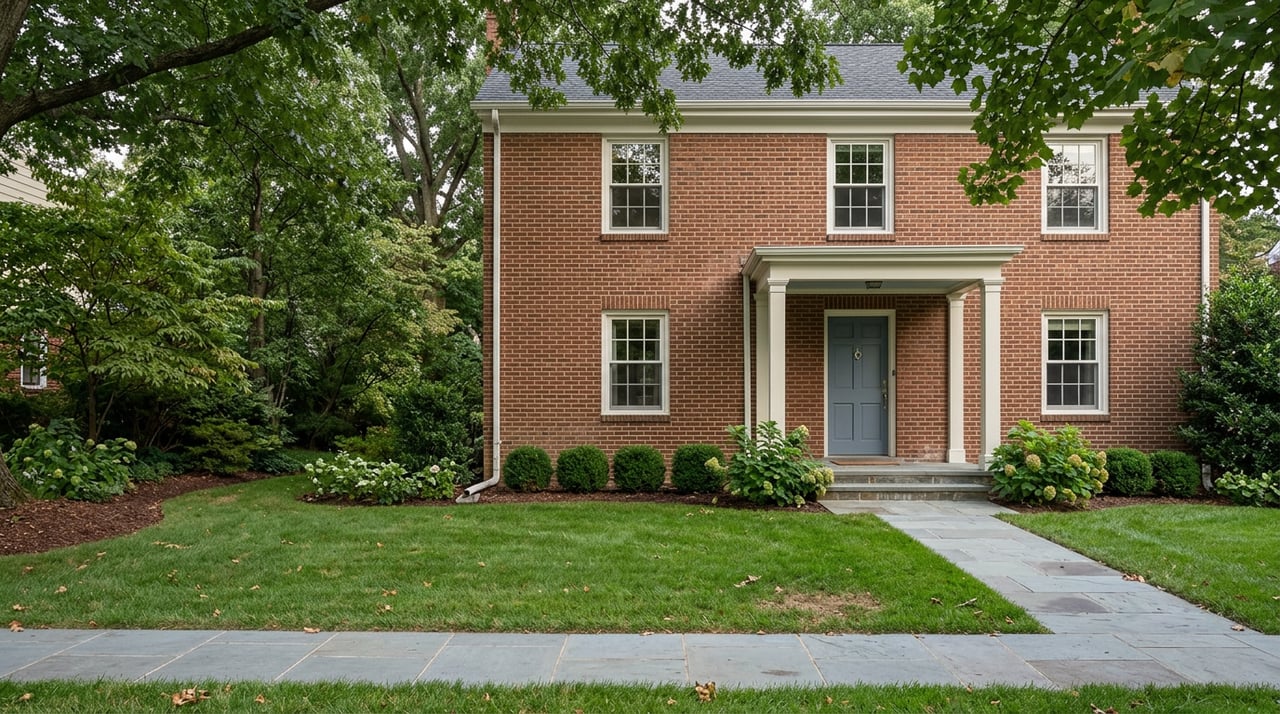
Soil conditions alone would be a manageable issue if Mount Vernon's septic systems were new. They mostly aren't. The Route 1 corridor communities of Bon Air, Groveton, and Hybla Valley, along with the broader Mount Vernon area, developed in waves starting in the 1950s and continuing through the 1970s. Belle Haven, along the Mount Vernon corridor closer to the river, followed a similar timeline. Farther into the district, subdivisions like Woodley Hills, Wessynton, and Yacht Haven filled in from the 1950s through the early 2000s, with ranch houses, split-levels, and Colonial Revivals lining the winding streets that define the area today.
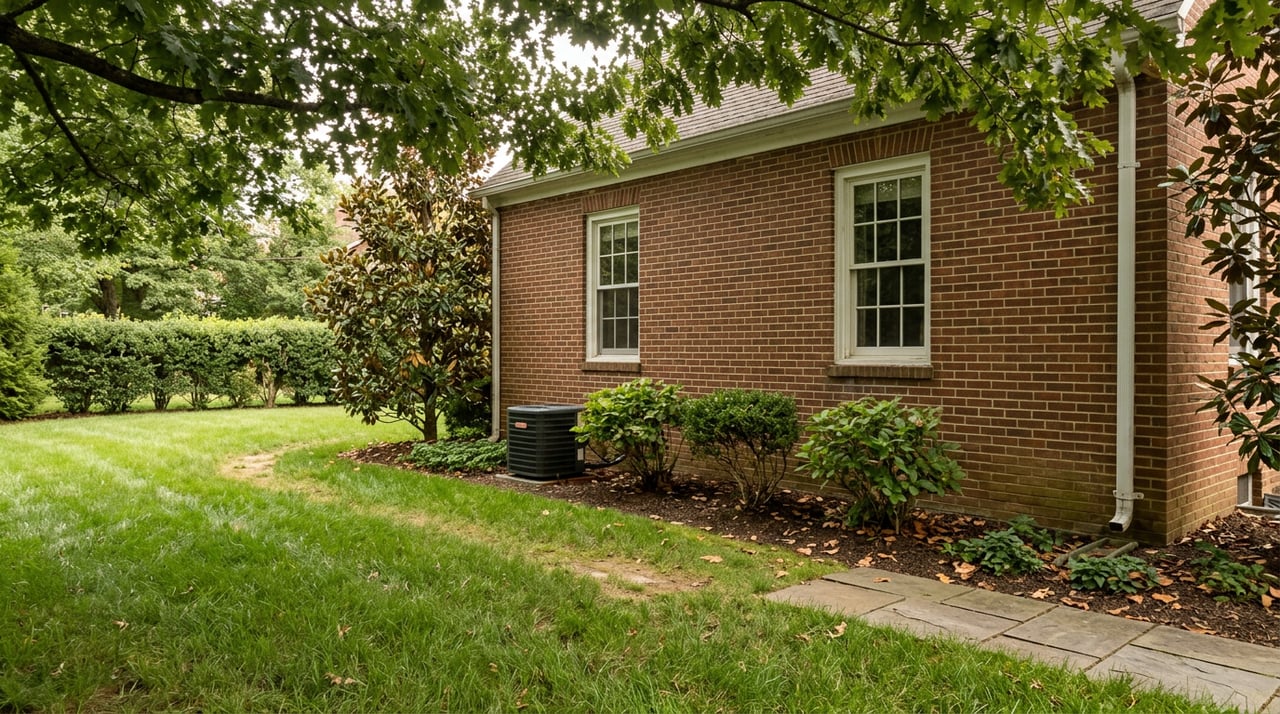
A septic system installed during any of those early build-out decades is now decades into a service life that was never designed to be permanent. Put that age against soil the county itself calls marginal, and you get a housing stock where "when was this last inspected" isn't a formality. It's the question that decides whether a sale closes on schedule or stalls in renegotiation.
| Typical build era in Mount Vernon | System age today | What that means at sale |
|---|---|---|
| 1950s to 1960s (Bon Air, Groveton, Hybla Valley, Belle Haven) | 60 to 75 years | High likelihood of at least one prior repair or replacement, records may be incomplete |
| 1970s to 1980s (much of the Mount Vernon subdivision wave) | 40 to 55 years | Installed under permitting standards far looser than today's, worth verifying against county records |
| 1990s to early 2000s (later infill, some Wessynton and Woodley Hills sections) | 25 to 35 years | Younger systems still due for their five-year pump-out cycle under county code |
The waterfront layer
A meaningful share of Mount Vernon sits along the Potomac or its tributaries, Dogue Creek and Little Hunting Creek among them. The county's comprehensive plan notes that shoreline areas here fall under the Chesapeake Bay Preservation Act, with county policy favoring living shorelines and added protection for water quality along those corridors.
For septic owners in these areas, that's a second layer of obligation stacked on top of HB 2671. Fairfax County Code already requires septic tanks countywide to be pumped at least once every five years, independent of any sale. In CBPA-protected zones, that pump-out cycle carries more weight, since a failing system near the river doesn't just cost the homeowner, it affects water quality for everyone downstream. If your property touches protected shoreline, the relevant question isn't only "am I ready to sell." It's "am I current on a maintenance cycle the county already expects of me, sale or no sale."
What a failed inspection actually costs, and why the math matters more this year
A standard septic inspection under the new standard, including pumping, typically runs a few hundred dollars. A failed system is a different conversation entirely, with repair or replacement costs that can run from a few thousand dollars for minor fixes into the tens of thousands for a full system replacement, depending on soil conditions and system type.
That range matters more in Mount Vernon right now than it did a few years ago, because the dollar figure attached to a delayed or renegotiated closing has grown. Mount Vernon's median sale price reached $924,447 as of May 2026, up 7.8 percent year over year, with current asking prices in the 22308 zip code near $1.05 million and 22309 closer to $692,000. In Wessynton specifically, homes have been closing at or slightly above asking price this summer, typically within four to seven weeks on market. At those prices, a septic issue discovered mid-transaction isn't a rounding error. It's the kind of finding that gives a buyer's agent real leverage to ask for a five-figure credit, and it's the kind of delay that can push a closing past a rate lock or a contingent purchase on the other end.
The sequencing that actually protects sellers
The sellers who come out ahead on this aren't the ones who hope the topic doesn't come up. They're the ones who control the timeline.
- Pull your original installation permit and any pump-out records from Fairfax County before you do anything else. If you don't have them, the county's Health Department maintains them on file.
- Schedule a licensed inspection yourself, before you list, with a properly credentialed operator or soil evaluator. This puts you in control of timing and cost instead of reacting to a buyer's 10-day window.
- If the system passes, put it in writing and let it work in your favor during negotiations.
- If it doesn't, you get to fix it on your own schedule, with your own contractor, instead of under deadline pressure mid-contract.
- If your lot touches the river or a protected tributary, confirm your five-year pump-out cycle is current regardless of whether you're selling this year or three years from now.
A few questions worth asking before you list
Does every home sale in Mount Vernon now require a septic inspection? No. HB 2671 doesn't mandate an inspection on every transfer. It sets the standard for what counts as one the moment a lender, agent, or buyer requests it, which in practice means most transactions end up with one anyway.
Who's actually qualified to perform this inspection? Only a Virginia DPOR-licensed onsite sewage system operator, installer, or soil evaluator. A general home inspector checking the septic system as part of a broader walkthrough doesn't meet the new standard on its own.
What if I've never had my system inspected in the years I've owned the home? That's common in a market where systems were often installed under a builder's original permit decades ago and never revisited. It's also exactly the situation where a pre-listing inspection protects you most, since it gives you time to address anything the inspector finds before a buyer's clock starts running.
Septic condition used to be one of the few things a seller could describe in their own words. In Mount Vernon, where the soil and the housing stock have been working against these systems for decades, that's no longer entirely true. Get ahead of it, and it's a selling point. Wait for a buyer's inspector to find it first, and it's leverage you handed away for free.
If you're weighing a sale in Mount Vernon and want to talk through what a pre-listing inspection could mean for your specific property, YAMO Premier Properties knows this corridor well enough to help you sequence it right. Reach out and ask about our free market report to see where your home stands before you make a move.